
You’re tidying up your home, enjoying the satisfying hum of your vacuum cleaner as it zips across the floor, and then it hits you – a strange, unpleasant odor. Whether it’s a musty stench, a faint whiff of burning rubber, or something truly mysterious, a smelly vacuum can quickly turn a productive chore into a frustrating puzzle. Where is that smell coming from? Is it dangerous? Is the vacuum broken?
Beyond the simple unpleasantness, a bad smell is often a sign that your vacuum needs attention. It can indicate a decrease in performance, a hidden clog, or even an impending mechanical issue. Understanding why does my vacuum smell is the first and most important step to achieving a fresher home and maintaining a healthier, longer-lasting appliance. It’s a question that, once answered, can save you time, money, and a lot of frustration.
Fortunately, most smelly vacuum issues are easily diagnosed and often fixed right at home with a little bit of know-how. In this comprehensive guide, we’ll explore the five most common reasons why does my vacuum smell and provide clear, actionable steps to get your vacuum smelling fresh and clean again. We’ll walk you through the simple fixes and also explain when it’s time to call in the experts, like the trusted local technicians at Low Country Vacuum & Sew, to ensure the job is done right.
Cause #1: The Overfilled Bag or Dirty Canister – The Most Common Culprit
Perhaps the most frequent and straightforward answer to the question, why does my vacuum smell? lies right within its primary collection point: the bag or canister. Think about everything your vacuum sucks up on a daily basis: dirt, dust, pet dander, hair, food crumbs, allergens, and all sorts of other microscopic debris. These particles don’t just disappear; they sit and accumulate in the bag or canister.

The Problem:
Over time, this collected organic matter begins to decompose. If any moisture is introduced—say, from vacuuming a damp spot on the carpet or from humidity in the air—it creates the perfect breeding ground for bacteria and mold. This process leads to that unmistakable, often pungent, “wet dog” or musty odor that gets blasted back into your home every time you turn the vacuum on. It’s a common reason people find themselves asking why does my vacuum smell, especially in homes with pets or small children. Even if a bag isn’t visibly bursting at the seams, the accumulated microscopic particles can fester and become a significant source of household odor.
The Solution:
The fix is simple but crucial for a fresh-smelling home.
- For Bagged Vacuums: Regularly check and replace your vacuum bag before it’s completely full. Don’t wait for the machine to lose suction or for the bag-check indicator to turn red. A good rule of thumb is to replace it when it’s about two-thirds full. High-quality, multi-layer filtration bags are also excellent at trapping odors and fine dust, making them a worthwhile investment.
- For Bagless Vacuums: It is essential to empty your dirt canister after every single use. This prevents debris from sitting and developing odors. At least once a month, take the time to wash the canister thoroughly with warm, soapy water. The most important step is to let it air dry completely for at least 24 hours before putting it back into the vacuum. Reinstalling a damp canister is a guaranteed way to create a mildew problem.
Pro Tip: For an extra boost of freshness, you can place a deodorizing tab or a cotton ball with a few drops of your favorite essential oil inside a new, clean vacuum bag. For bagless models, make sure the canister is completely dry before adding any deodorizers.
A Subtle Helping Hand: Using the right bag is crucial for performance and odor control. For genuine replacement bags that are guaranteed to fit your specific model—whether it’s a Miele, Riccar, or Sebo—visit us at Low Country Vacuum & Sew. Our experts can ensure you get the perfect fit for optimal airflow and odor trapping.
Cause #2: Clogged or Expired Filters – Trapping More Than Just Dirt
Filters are your vacuum’s unsung heroes. They act as the lungs of the machine, trapping fine dust, pollen, pet dander, and other allergens before the air is exhausted back into your room. However, when these filters become saturated with debris, they can become a primary source of bad odors and a frustrating puzzle when you’re wondering why does my vacuum smell.
The Problem:
A thick layer of trapped dust, dander, and other microscopic particles on a filter can develop a stale, musty, or even sour odor over time, particularly if any moisture has been introduced. This is especially true for pre-motor filters that protect the motor from debris. A clogged filter not only smells bad but it also severely restricts airflow. This forces your vacuum’s motor to work harder, which can lead to overheating and a decrease in suction power, making your cleaning efforts less effective and potentially shortening the life of your machine.
The Solution:
Filter maintenance is a non-negotiable part of keeping your vacuum running efficiently and odor-free.
- Check Your Manual: Your vacuum’s user manual is your best friend. It will tell you where your filters are located (most vacuums have a pre-motor filter and a post-motor, or HEPA, filter) and what the manufacturer’s recommended cleaning and replacement intervals are.
- Wash or Replace: Many foam or felt pre-motor filters are washable with lukewarm water. Gently rinse them until the water runs clear and let them air dry completely before reinstallation. However, most post-motor and certified HEPA filters are not meant to be washed and must be replaced to maintain their effectiveness.
- Be Consistent: As a general guideline, consider replacing your filters every 6 to 12 months. If you live in a household with pets, smokers, or allergy sufferers, you may need to replace them more frequently, perhaps every 3 to 6 months. A quick visual inspection once a month is always a good habit.
Pro Tip: Never use harsh chemical cleaners, detergents, or fragrances directly on your vacuum filters. These can damage the delicate filter material or release harmful fumes into your home when you next vacuum.
A Subtle Helping Hand: Not sure which filter your vacuum needs? It can be confusing. Our team at Low Country Vacuum & Sew can help you find the perfect fit and offer expert advice on filter maintenance to keep your home in Charleston, SC, fresh, clean, and allergen-free.
Cause #3: The Clogged Brush Roll or Airpath – That Burning Hair Scent
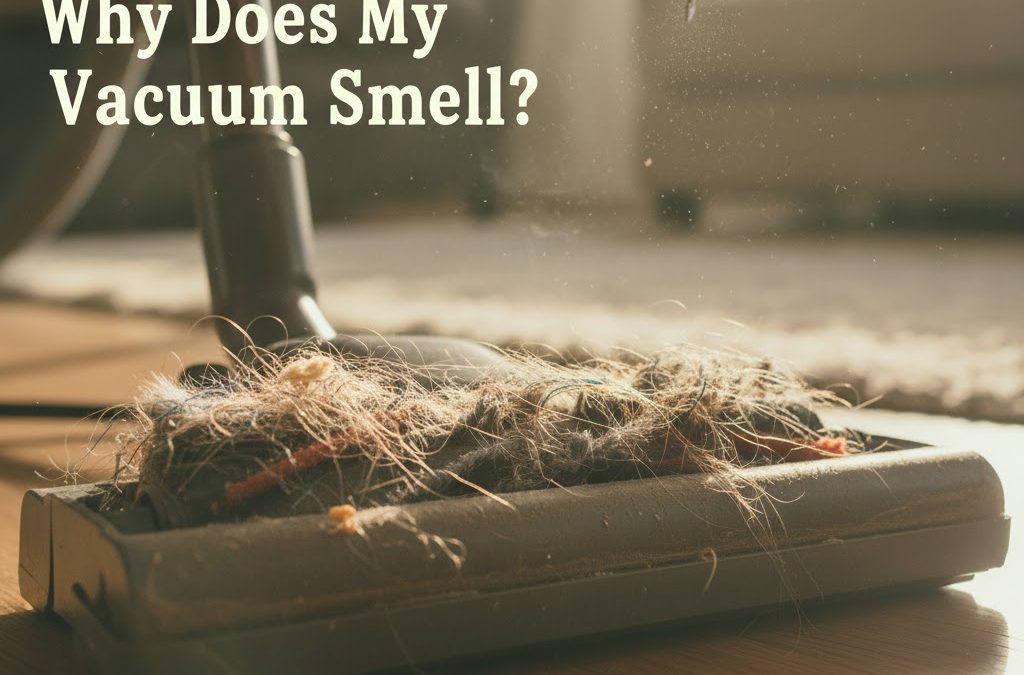
If you’re noticing a distinctly warm, sometimes acrid, smell—like burning hair or overly heated dust—the answer to why does my vacuum smell might be hiding in plain sight on the underside of your machine. Your vacuum’s brush roll, or beater bar, is designed to agitate carpet fibers to loosen deep-down dirt, but it’s also a magnet for hair, string, and other fibers.
The Problem:
Over time, long hair, pet fur, carpet fibers, and threads can become tightly wrapped around the brush roll. As the brush spins at thousands of RPMs, this tangled mass creates immense friction and heat. This effectively “cooks” the trapped materials, causing them to release that unpleasant burning odor. In addition to the smell, a clogged brush roll cannot spin freely, which means it isn’t effectively cleaning your carpets and is putting extra strain on the drive belt and motor. Similarly, a blockage in the hose, wand, or intake port can restrict airflow, leading to overheating and the accumulation of smelly debris in warm parts of the machine.
The Solution:
This fix requires a little hands-on work, but it’s a critical maintenance task.
- Safety First! Before you do anything else, unplug your vacuum from the wall outlet. Never attempt to clean the brush roll while the machine is plugged in.
- Inspect and Clean: Carefully turn the vacuum over to access the brush roll. Use a pair of scissors or a seam ripper to carefully snip away any tangled hair and debris. Be gentle to avoid cutting the bristles themselves. Pull out the debris by hand or with a pair of pliers.
- Check All Airpaths: While you’re at it, detach the hose and wand and check for any visible blockages. You can often use a broom handle (carefully!) to push through any stubborn clogs in the main hose.
Pro Tip: Make cleaning your brush roll a regular part of your cleaning routine, especially if you have long-haired pets or family members. A clean brush roll not only prevents odors but is also one of the most important factors in maintaining your vacuum’s deep-cleaning effectiveness.
A Subtle Helping Hand: Sometimes a clog is deep inside the machine, or a badly tangled brush roll can cause hidden damage to the end caps or drive belt. If you’ve cleaned the brush and still sense a problem, our expert technicians in Charleston, SC, are ready to help. Visit us for a professional inspection and tune-up service.
Cause #4: A Worn or Damaged Belt – The Unmistakable Smell of Burning Rubber
When you ask, why does my vacuum smell like burning rubber?, the answer is almost always a worn-out, stretched, or broken drive belt. This humble rubber belt is the critical component that transfers power from the motor to the brush roll, making it spin and agitate your carpet. When it fails, the smell is a clear and immediate warning sign.
The Problem:
Vacuum belts operate under high tension and heat, and over time, they naturally stretch and degrade. An old, stretched belt can slip on the motor shaft or the brush roll pulley as it struggles to maintain grip. This slipping action creates intense friction, which rapidly heats the rubber and produces that distinct, sharp smell of a burning tire. If the belt breaks completely, the brush roll will stop spinning altogether, but the motor shaft may continue to spin against the broken belt, generating even more heat and odor.
The Solution:
This is a problem that should be addressed immediately to prevent further damage.
- Inspect and Replace: Unplug your vacuum and remove the bottom plate to access the brush roll and belt. Look for obvious signs of wear, such as cracking, fraying, thinning, or loss of elasticity. If the belt looks damaged or feels loose, it needs to be replaced. For many models, this is a straightforward DIY fix that only requires a few minutes and a new belt.
Pro Tip: Always use a genuine replacement belt designed specifically for your vacuum’s make and model. “Universal” or generic belts might seem to fit, but they can be too tight or too loose, leading to poor performance, strange noises, and even damage to the motor or brush roll.
A Subtle Helping Hand: Don’t ignore the smell of burning rubber! It’s your vacuum’s cry for help. We carry a wide range of genuine replacement belts for top brands like Kirby, Riccar, and more. If you’re not comfortable replacing it yourself, or if you prefer a professional touch, our certified technicians at Low Country Vacuum & Sew can handle it quickly and safely, often while you wait.
Cause #5: A Serious Motor Problem – Why It’s Time for Professional Help
This is the most serious and urgent answer to the question, why does my vacuum smell? If you detect a sharp, acrid, electrical, or ozone-like burning smell—often compared to melting plastic or hot wires—it almost always indicates a problem with the vacuum’s motor.
The Problem:
This alarming odor can be caused by a number of critical issues, including severe overheating due to a blockage, a short circuit in the wiring, worn-out carbon motor brushes, or failing bearings. Unlike a dirty filter, a motor problem isn’t something to ignore or put off. Continuing to run a vacuum with a compromised motor can lead to permanent and irreparable damage to the appliance or, in rare but serious cases, create a fire hazard in your home. This smell might also be accompanied by a sudden loss of suction, loud or unusual grinding noises, or even smoke.
The Solution:
The solution here is simple, direct, and non-negotiable.
- STOP IMMEDIATELY: If you smell an electrical burn, unplug your vacuum from the wall outlet at once and do not, under any circumstances, plug it back in or attempt to use it again.
- Do Not Attempt a DIY Repair: Unless you are a qualified and experienced appliance technician, do not try to open up the motor housing or fix internal electrical components. This can be extremely dangerous and can void any remaining warranty on the machine.
When to Seek Professional Help:
This is precisely where the expertise of a professional vacuum service center becomes invaluable. Certified technicians have the diagnostic tools and specialized knowledge to safely identify the root cause of the motor issue. They can determine if a repair is feasible and cost-effective or if the damage is extensive enough that it’s time to consider a new, reliable machine.
Our Direct Invitation: For a safe and accurate diagnosis of any motor issues—or any persistent problem that makes you wonder why does my vacuum smell—we invite you to bring your vacuum to Low Country Vacuum & Sew.
- Visit Us: 1663-D Savannah Hwy, Charleston, SC 29407
- Call Us: (843) 766-3347
We offer a free, no-obligation estimate to give you clear answers quickly. Proudly serving vacuum owners across the Low Country, including our neighbors in Summerville and Mount Pleasant, our factory-trained technicians can get your vacuum running safely and efficiently again.
A Breath of Fresh Air for Your Home
From routine maintenance like changing bags and filters to addressing more serious issues like worn belts and motor problems, understanding why does my vacuum smell empowers you to keep your home cleaner and your appliance healthier. Most odors are simple fixes that are part of responsible vacuum ownership, but as we’ve seen, some are clear warning signs that should not be ignored.
Remember, regular maintenance not only prolongs the life of your vacuum but also ensures it cleans effectively, improves your home’s air quality, and keeps your living space smelling fresh. If you’ve tried these tips and your vacuum still has a lingering odor or isn’t performing at its best, don’t hesitate to reach out to the friendly experts at Low Country Vacuum & Sew. We’re here to help you breathe easy!